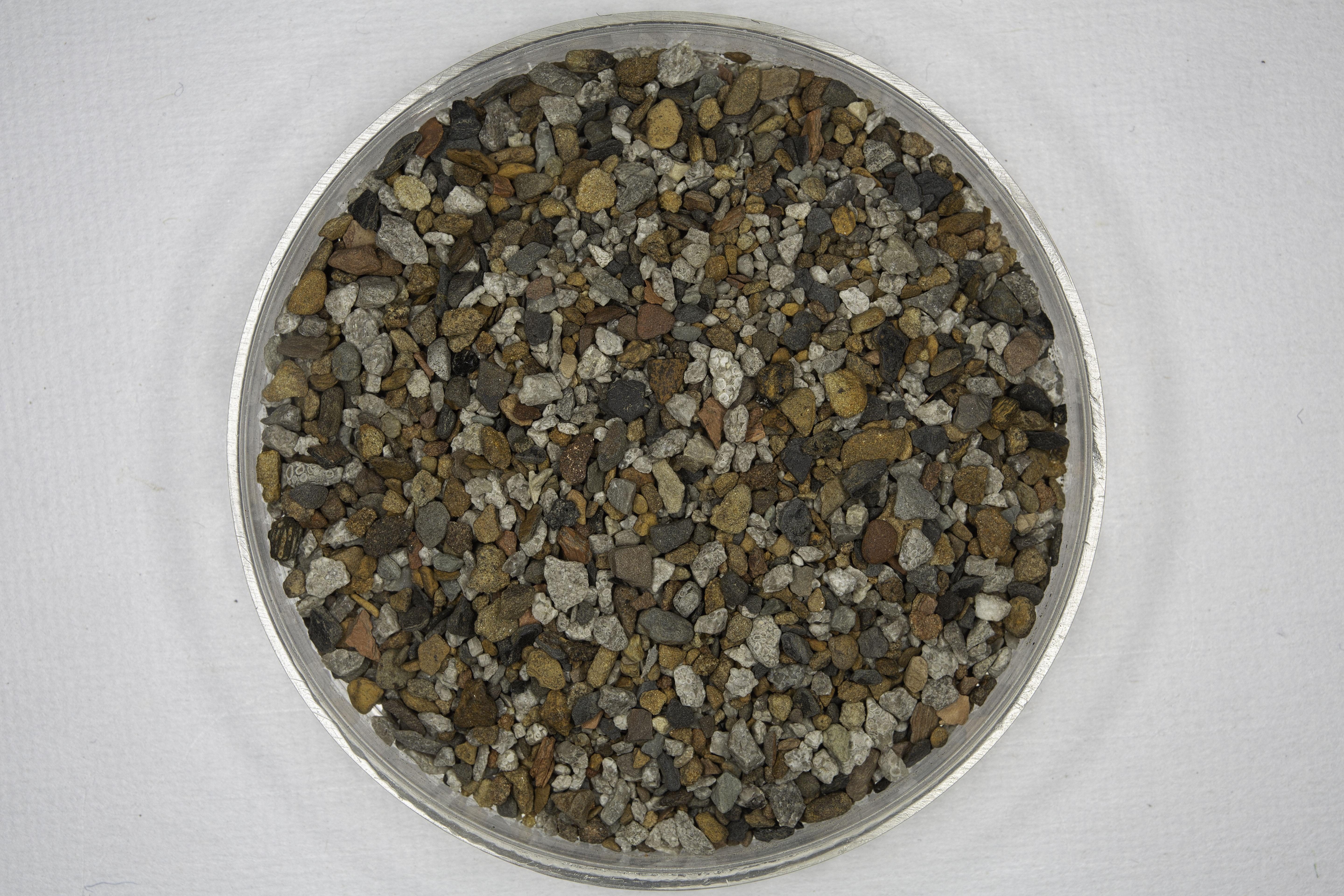
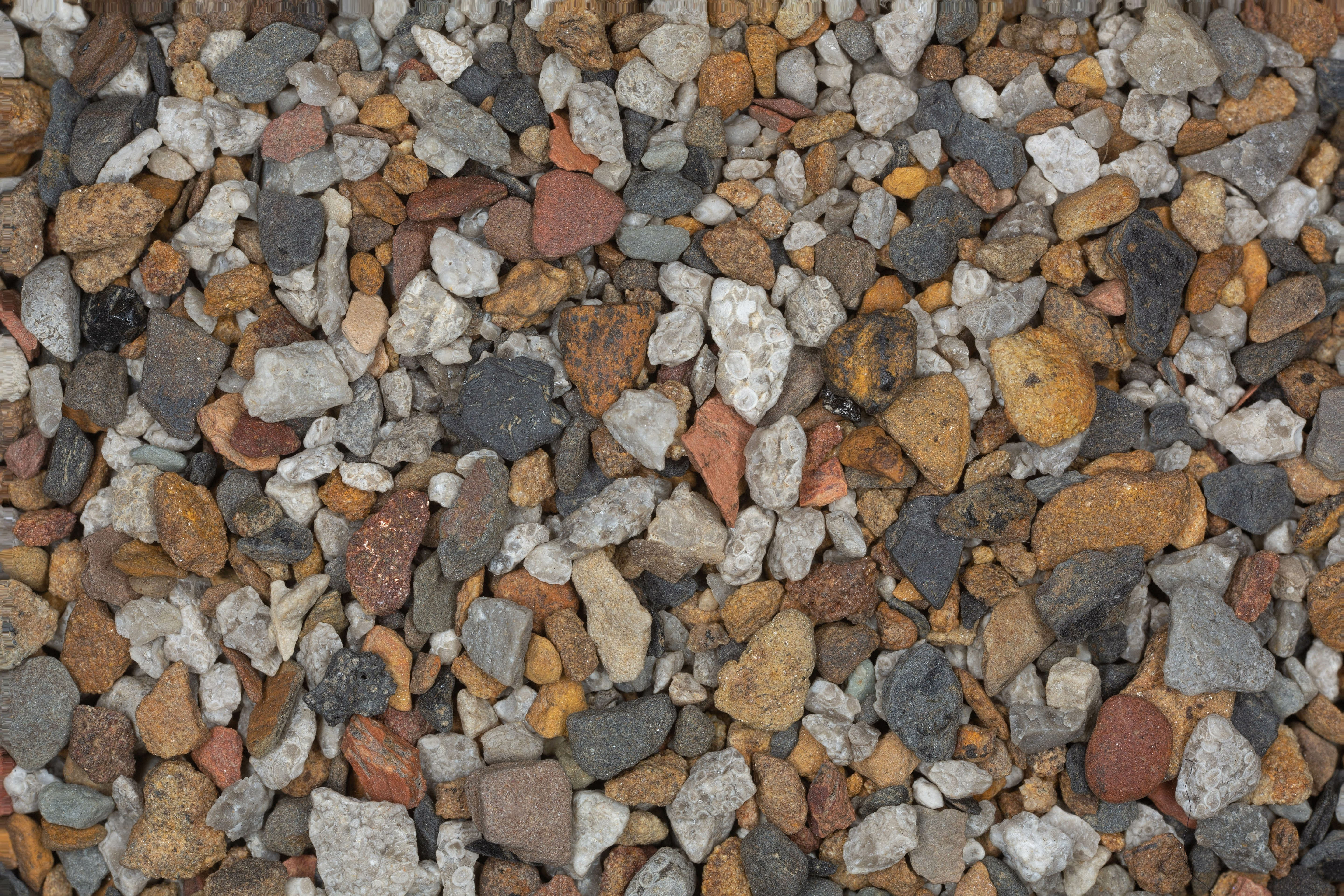
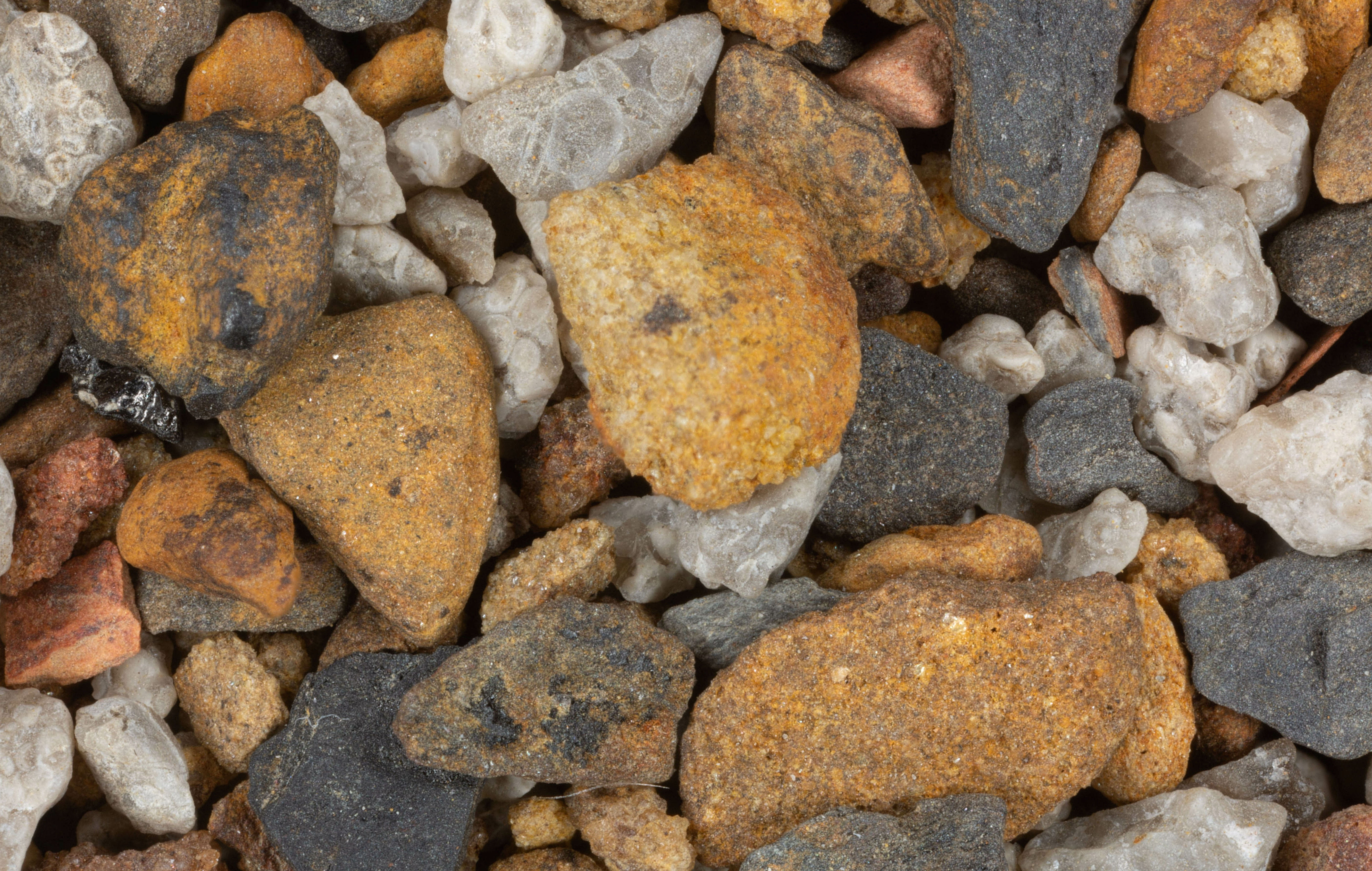
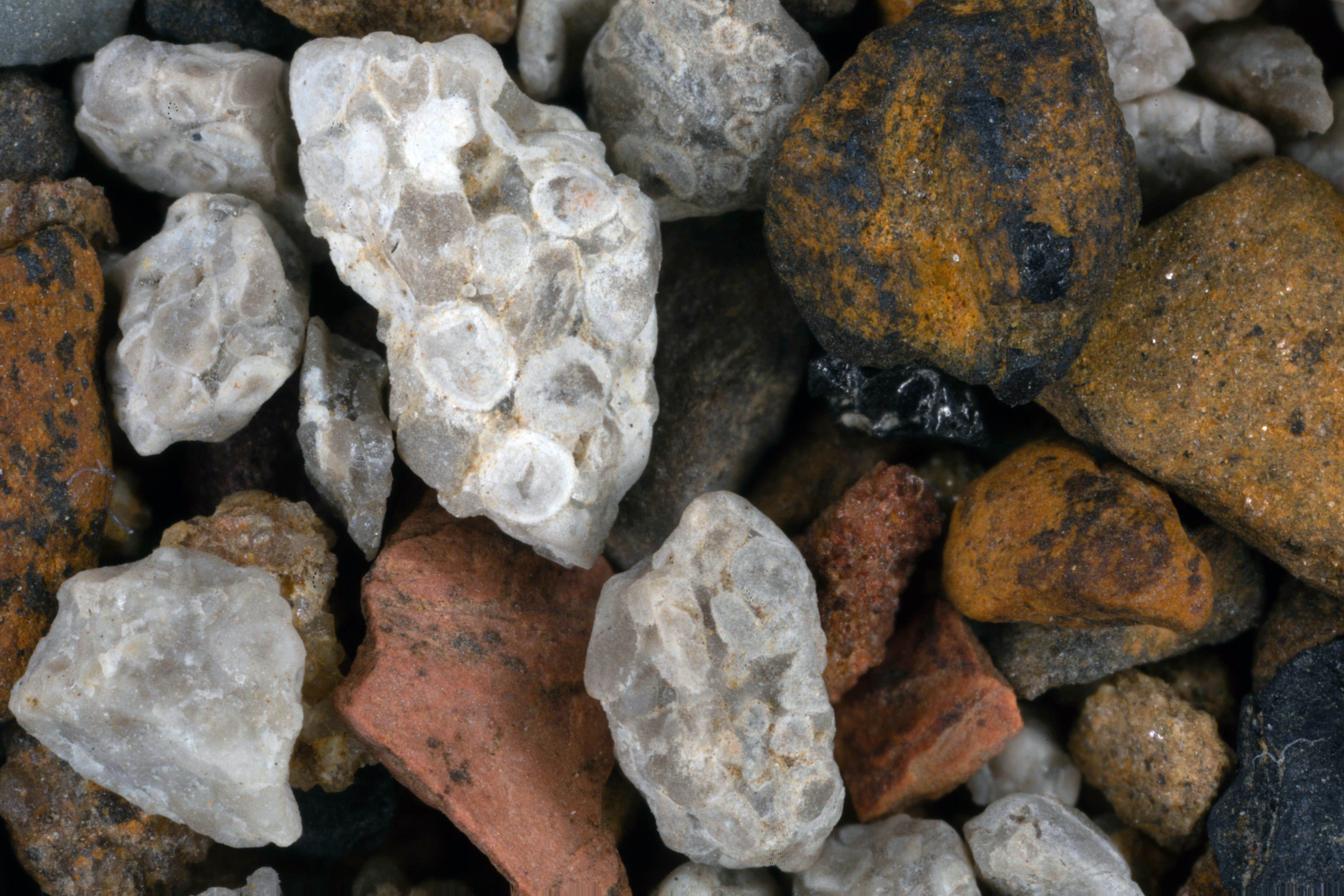
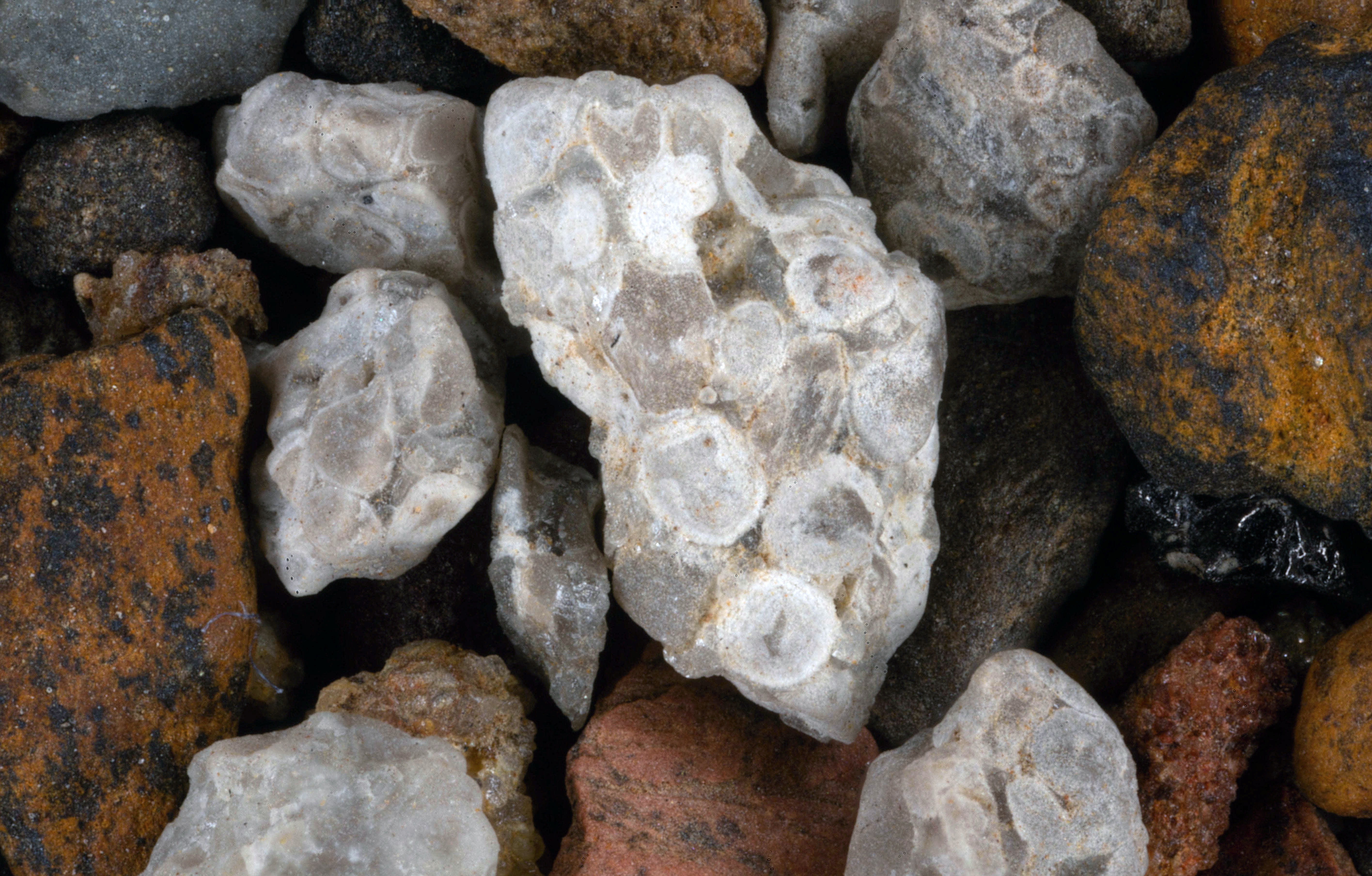
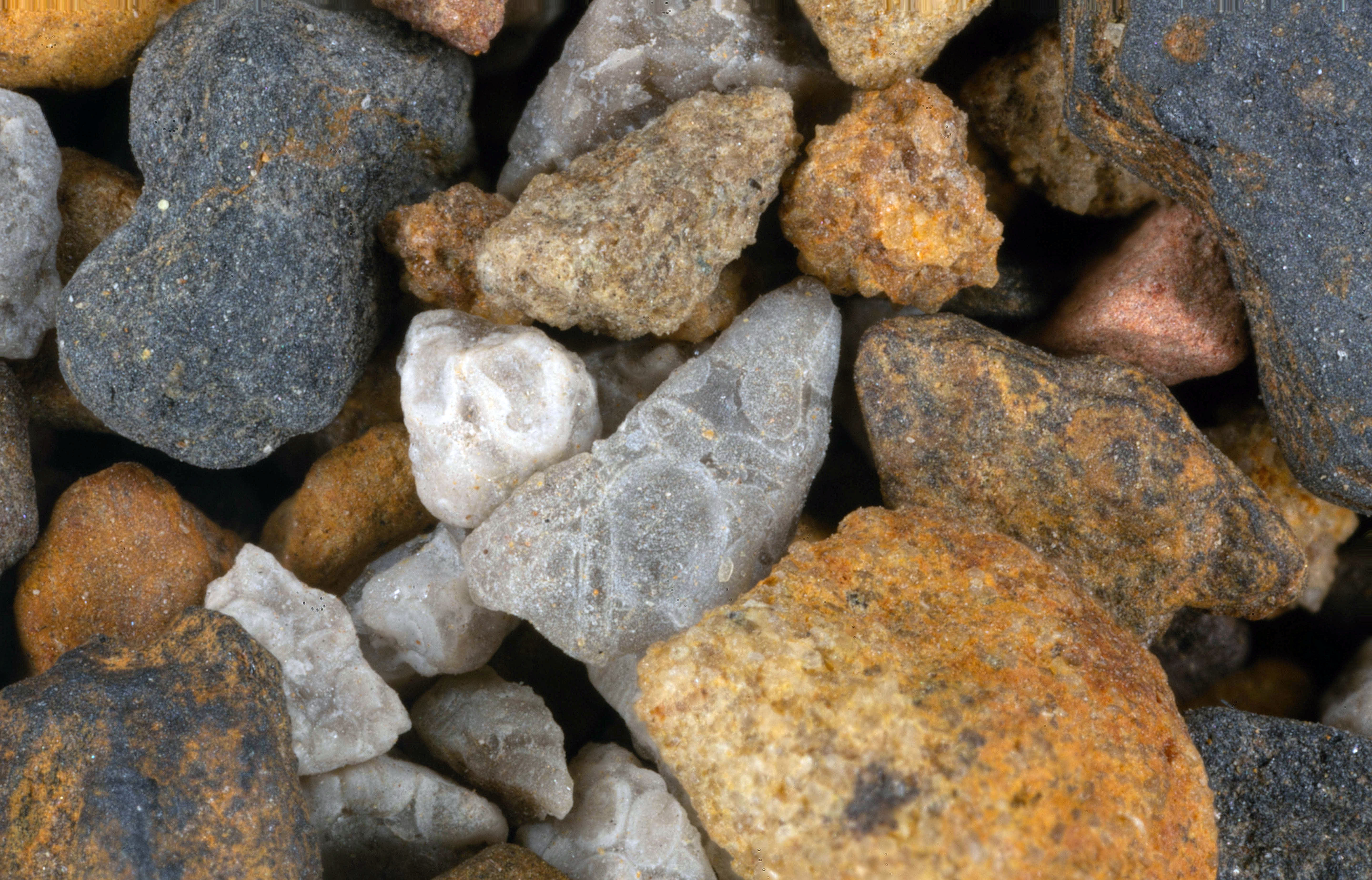
Gruetli Laager is located on or near the Cumberland Plateau (part of the greater Appalachian Plateau). The bedrock in that area is a thick section of Mississippian limestones capped by Pennsylvanian deltaic and braided river sandstones, including significant coal deposits. Your Quaternary sand grains are a mix of the Pennsylvanian sandstone (the brownish grains; brown from significant Feox-staining and liesegang banding in the sandstone) and greyish Mississippian limestones, maybe from the Ft Payne Formation, which is present at the bottom of the plateau right as you start to climb up onto it. The typical fossils you see in the limestones around there are crinoids, brachiopods, and bryozoa. I can't remember if there is oolitic LS in the section there, but perhaps in the unit above the Ft Payne (Bangor LS or, moving upsection, Monteagle LS or, moving upsection, possibly thin LS interbeds in the Raccoon Mtn Fm). Either way, the sand you collected samples ≤300 m of stratigraphy in the Mississippian-Pennsylvanian section.
cheers,
Jason Price
They look likely to be fossils in the rock, rather than the grains themselves being fossils. It's hard to judge from the unpredictably angled cross-sections in the surface of the grains.
--
Dr. David Campbell
|
|
Numerous other folks suggested that they were oolitic structures.
|